
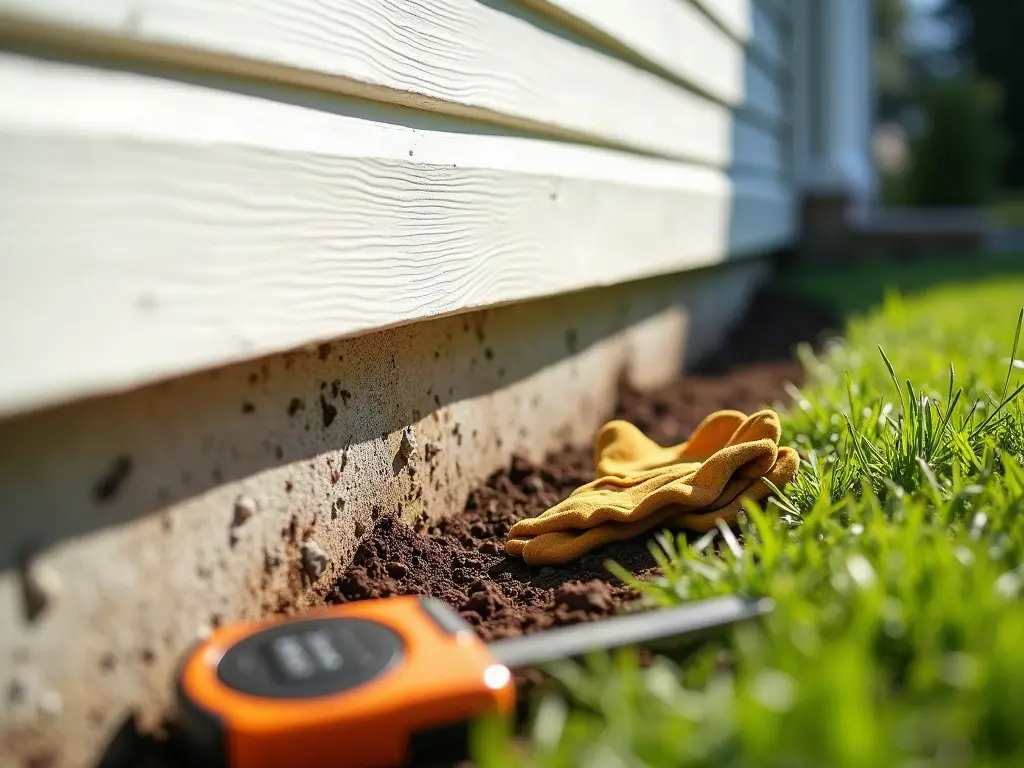
What should a pest pro look for on a first inspection? Start with the pest itself and name it before recommending anything. Then look past the one spot the customer pointed at. Walk the whole outside for ways in, water and hiding places, check inside for live activity versus old signs, and write each finding down by location with a photo and a fix.
A good first inspection does a second job too. Every condition you find is a possible line on the estimate, so the walk that gets the treatment right is also the walk that gets you more than one job.
What should I ask the customer before I look at anything?
Ask four things before you open your kit: what they saw, where they saw it, when it started, and whether anyone has already put down a pesticide. The answers tell you where to start and what you might be walking into.
Then ask about the house. A recent remodel, a new addition, a finished basement or new siding can hide activity behind fresh drywall and trim. A store-bought spray can scatter ants or push them into new trails, so knowing about it changes what you expect to see.
What should a pest pro look for on a first inspection outside the house?
Outside, inspect the entire structure, not just the wall nearest the kitchen where the ants showed up. Go all the way around and check every door, every window, the roofline, the garage, sheds, trash cans and anywhere packages get dropped.
Ways in
- Gaps under doors and around windows
- Holes in siding, brick or the foundation
- Where pipes, wires, dryer vents and AC line sets go through the wall
- Attic, soffit and crawlspace vents, and gaps at the roofline
Water
- Standing water, leaky hose bibs and clogged gutters
- Downspouts dumping right at the foundation
- Sprinklers hitting the siding, and a damp crawlspace
Food and shelter
- Open trash, pet food on the porch, bird feeders
- Mulch and shrubs touching the siding, tall grass
- Firewood against the house, clutter in the garage
- A neighbor's overgrown lot or woodpile along the fence
What should I check on a first visit before I quote?
Inside, confirm the pest and how active it is before you put a price on anything. Start where the customer saw activity, then follow it: under sinks, behind the fridge and stove, the pantry, baseboards, the garage, the attic and the basement or crawlspace.
Look for live pests, droppings, cast skins, nests, gnaw marks, tracks, feeding damage and stains. Then sort the evidence into active and old. Live insects, fresh droppings and new gnawing mean activity now.
Dead insects, hatched eggs, cast skins and stains can be old or new. A house still showing signs of last year's problem shouldn't be quoted like a live infestation.
For bed bug calls, start where people sleep, sit or rest, and widen to storage and anything moved between rooms. In an apartment, duplex or townhouse, ask whether the units next door can be checked too, because skipping them is how the source gets missed.
Identify the pest by common or scientific name before recommending treatment. Treatment follows the product label and your state's pesticide rules, which vary by state, so check with your state's pesticide agency when you're unsure.
What should I photograph on a site visit?
Photograph every finding the way you'd want to see it if the customer called back in a month: the evidence, the condition behind it, and where on the house it is. A close shot and a wide shot showing the location cover most findings.
- The evidence: trails, droppings, gnaw marks, mud tubes, nests
- The way in: the gap, the hole, the missing door sweep
- The water: the downspout, the leak, the wet soil
- The hiding spot: mulch on the siding, the woodpile, the cluttered shelf
Write a line under each photo saying what it shows. "Gap around AC line, east wall, behind the condenser" is a photo you can sell from. "Ants" is not.
How do I use photos to sell the work?
Show the customer the photo and the fix side by side. Most homeowners have never looked behind their condenser or under their garage door, and a clear picture of the gap does the explaining for you. Keep each record to five parts: the area, the evidence, the condition, the fix, and where you'll treat or monitor.
Can I quote a job from a satellite view?
A satellite view can set a price range for a recurring exterior plan, but it can't replace walking the property. From above you can see the roof shape, trees touching the house, mulch beds, woodpiles, sheds, a pool, and how close the woods or a creek sit.
When should I not quote from a satellite view?
Don't quote from above for rodents, bed bugs, termites or other wood-destroying insects, indoor roaches, or any call where you haven't identified the pest. Skip it after a remodel and for multi-unit buildings, too. When you do quote from above, give a range and confirm it on the first visit.
How do I turn a site visit into more than one job?
Write up every finding as work you do or work the customer does, and offer your work as separate lines. The treatment for what they called about is one line. A recurring plan, exclusion work, and any other pest you found each get their own line, so the customer can say yes to some and no to others.
Put the things the customer fixes, like moving firewood, extending a downspout or trimming shrubs, on the write-up as recommendations. They help your treatment work and show you looked. If a recurring plan is on the table, decide how you'll bill it first; see whether pest control should be billed monthly or quarterly.
Worked example: an ant call that turns into three jobs
Say a homeowner calls about ants on the kitchen counter. The ants started two weeks ago near the window over the sink, and the homeowner already sprayed a store-bought product there.
Outside, you find mulch piled against the siding under that window, a downspout dumping at the same corner, and a gap around the AC line set. In the garage, you find fresh mouse droppings along the back wall, a chewed bag of grass seed, and daylight under the side door.
With example prices, the estimate has three lines:
- Initial ant treatment, interior and exterior: $185
- Quarterly general pest plan, three more visits at $129: $387
- Rodent exclusion, door sweep and sealing the garage and line set gaps: $325
Moving the mulch back and extending the downspout go on the write-up as the homeowner's to-do items. Quoting only the ants would bring in $185. Offering all three lines puts $897 of first-year work in front of the customer, from the same visit.
| Line | Example price |
|---|---|
| Initial ant treatment | $185 |
| Quarterly plan, 3 more visits at $129 | $387 |
| Rodent exclusion, garage and line set | $325 |
| First-year total if all approved | $897 |
How do I measure whether inspections are selling work?
Track two numbers each month: lines per inspection and recommendation close rate. Both show whether your walks are finding work and whether customers are buying it.
- Lines per inspection = approved estimate lines ÷ inspections done
- Recommendation close rate = recommendations sold ÷ recommendations offered
For example, 20 inspections with 31 approved lines is 1.55 lines per inspection. Offering 40 recommendations and selling 14 is a 35% close rate. A notebook column works for this; just count the same way every month.